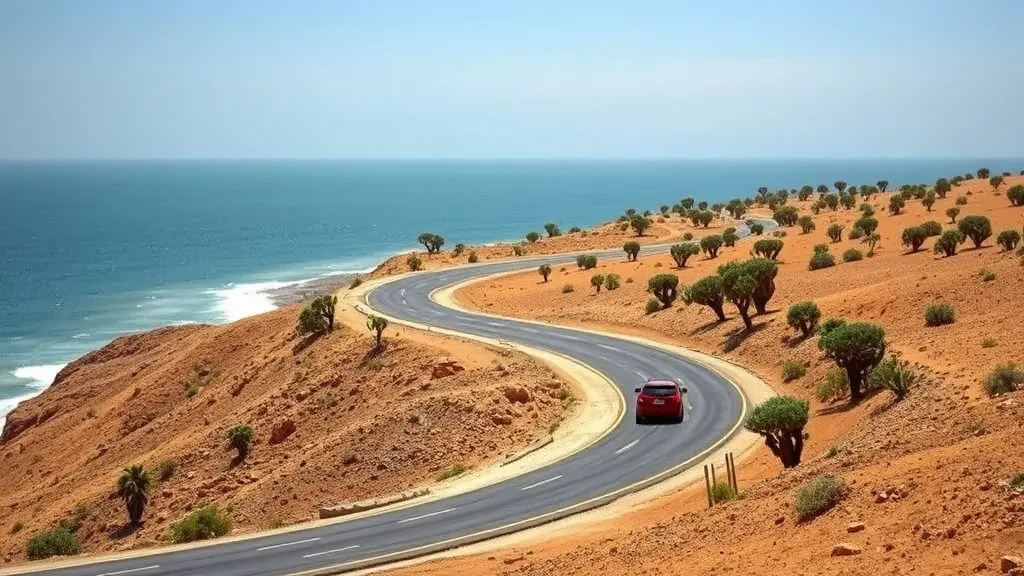
Your Guide to Driving in Essaouira, Morocco
Driving in Essaouira is usually straightforward, and the first 150 words of this guide answer the main intent: safe city driving, local rules, and the weather factors that matter on the Atlantic coast. Essaouira sits in the Marrakech-Safi region, and local road conditions are shaped by the Canary Current and the Alizé trade winds that make the city known as the Wind City of Africa.
Search & Compare Essaouira Car Rentals
Free cancellation on most vehicles
Is It Safe to Drive in Essaouira?
Yes, driving in Essaouira is generally safe for careful drivers, and the city is less stressful than Marrakech or Agadir. Local road expert Kelly, a British expat who has driven in Essaouira since 2023, says the slower traffic and more predictable driving style make the city a practical place to build confidence on Moroccan roads.
Essaouira’s main access roads, including the N1 toward Agadir and Safi, are typically in good condition, and the route to Marrakech via the A7 autoroute is the fastest option for longer trips. Rental visitors often compare local supply from Avis, Budget, Hertz, Europcar, and Thrifty with local companies such as Zirari Car, Chaaba Car, Louizi Car Rentals, Frères Car, Arganier Rent a Car, Sihabi Car, Jacaranda Car, and Medloc Maroc, because each company may handle deposits, insurance, and pickup differently.
⚠️ Warning: Many rental firms require a preauthorisation on your credit card before release of the vehicle, and the blocked amount can be larger than the daily rate.
For example, a rental desk may offer a Dacia Sandero, Kia Picanto, or Hyundai i10 for city use, while a Dacia Duster or Jeep Renegade is more suitable for family luggage and rougher access roads.
Morocco Speed Limits and Fines
Moroccan speed limits are simple to remember, and local police enforce them with checkpoints and mobile cameras. In town, the limit is usually 60 km/h; on rural roads such as the R207, P2216, and P2201, it is commonly 100 km/h; and on the A7 autoroute, the legal limit is typically 120 km/h.
| Road type | Typical limit | Notes |
|---|---|---|
| Urban streets | 60 km/h | Watch for taxis, scooters, and sudden pedestrian crossings |
| Rural roads | 100 km/h | Speed changes can appear near villages like Tamanar, Chichaoua, or Moulay Bouzerktoun |
| Autoroute | 120 km/h | Toll sections often use Jawaz for electronic payment |
Traffic fines are usually paid in cash on the spot, and officers should issue an official paper receipt or contravention. Under Morocco's traffic code (Law No. 52-05), third-party liability is mandatory for all vehicles, so rental customers should verify that the contract includes CDW, SCDW, or FDW and understand the excess/deductible or franchise before driving away.
| Violation | Fine (MAD) |
|---|---|
| Speeding up to 20 km/h over the limit | 300 |
| Speeding generally | 400 |
| Running a red light | 700 |
| No seatbelt per person | 300 |
| Mobile phone use while driving | 150–400 |
| Illegal parking | up to 1,500 |
💡 Tip: Ask the rental agent whether the policy includes zero excess or full coverage, and confirm whether rachat de franchise is included in writing.
⚠️ Warning: Do not drink and drive, because Morocco uses a near-zero alcohol tolerance, and police checkpoints often check documents, lights, and insurance details.
The Wind Factor — Driving Essaouira’s Alizé Winds
Essaouira’s weather is shaped by strong coastal winds, and local drivers adjust their speed, lane position, and visibility habits accordingly. The Alizé trade winds and the cooling Canary Current create the conditions that earned Essaouira the nickname Wind City of Africa, especially on exposed roads near the Atlantic coast.
On routes toward Diabat, Sidi Kaouki, Moulay Bouzerktoun, Imsouane, and Tafedna, wind can push sand onto the road surface and reduce grip, so drivers should slow down and keep both hands on the wheel. Local car renters often prefer a Renault Clio 5, Fiat Tipo, MG 3, Hyundai Accent, Dacia Logan, or Dacia Lodgy for these roads because each model balances comfort, visibility, and fuel use differently.
💡 Tip: A compact car such as a Dacia Dokker or Kia Picanto can be easier to control in crosswinds than a tall van or SUV, especially on open stretches of the N1.
Morning fog can also affect the shoreline and the road toward Dar Sultan Palace and the coastal access points around Bab Marrakech and Bab Sbaa, so low beam headlights and fog lights are safer than high beams.
Parking in Essaouira
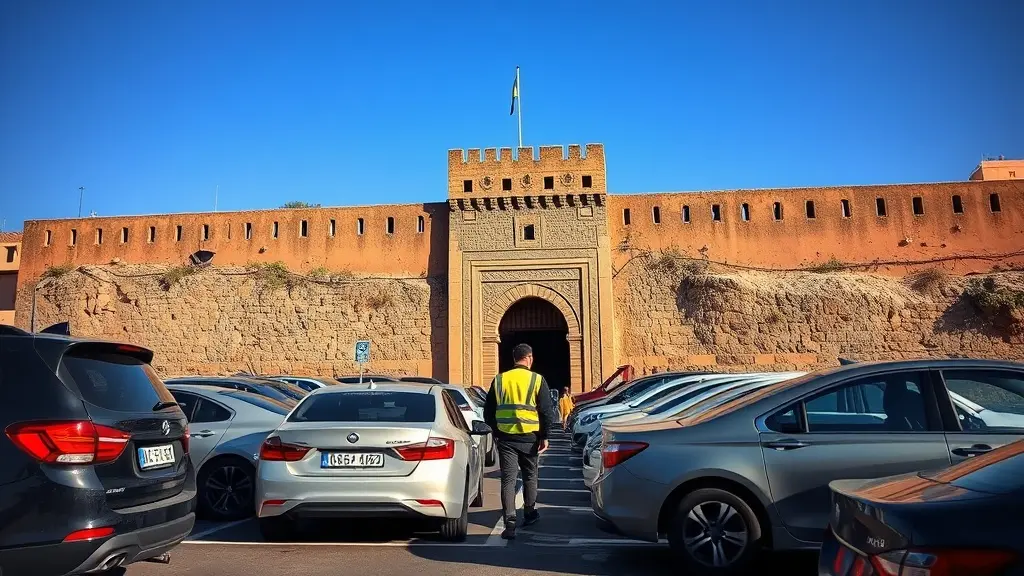
Parking in Essaouira is managed, affordable, and easiest outside the Medina walls. The old city is pedestrianized, so drivers normally leave rental cars near Bab Marrakech, Bab Sbaa, or other supervised lots and walk into the historic center.
The gardien system is common, and the attendant usually directs you into a space, watches the vehicle, and may help move cars when spaces are tight. Rental visitors should carry small change because many attendants cannot break large notes, and overnight parking often costs less than a taxi transfer from the center.
| Parking option | Typical price | Best use |
|---|---|---|
| Street or informal daytime parking | 5–10 MAD | Short visits and quick errands |
| Supervised lot | 10–25 MAD | Longer shopping or sightseeing stops |
| Overnight parking | 20–25 MAD | Hotel stays near the Medina or port |
💡 Tip: If you plan to park near the port before visiting the Medina, arrive early during the Gnaoua World Music Festival or August holidays because spaces fill quickly.
⚠️ Warning: Never leave valuables visible in the cabin, even in attended lots, because parking supervision reduces risk but does not eliminate it.
Morocco Roundabout Rules — The Tricky Part
Roundabout priority in Morocco depends on the signage, the lane markings, and whether traffic lights are installed inside the circle. In many modern intersections, traffic already in the roundabout has priority, but some larger junctions use traffic lights both at entry and inside the circle, which can surprise visitors driving from Marrakech or Agadir.
Local traffic behavior around Essaouira, Chichaoua, and the road link toward Tamanar can be more defensive than strict textbook rules suggest, so drivers should keep a steady line, avoid sudden lane changes, and watch the wheels of nearby cars. A Dacia Sandero or Renault Clio 5 is usually easier to place accurately in a tight roundabout than a larger vehicle.
💡 Tip: If you are unsure, stay in the outer lane, signal early, and exit predictably rather than forcing a late merge.
Road Hazards to Watch For
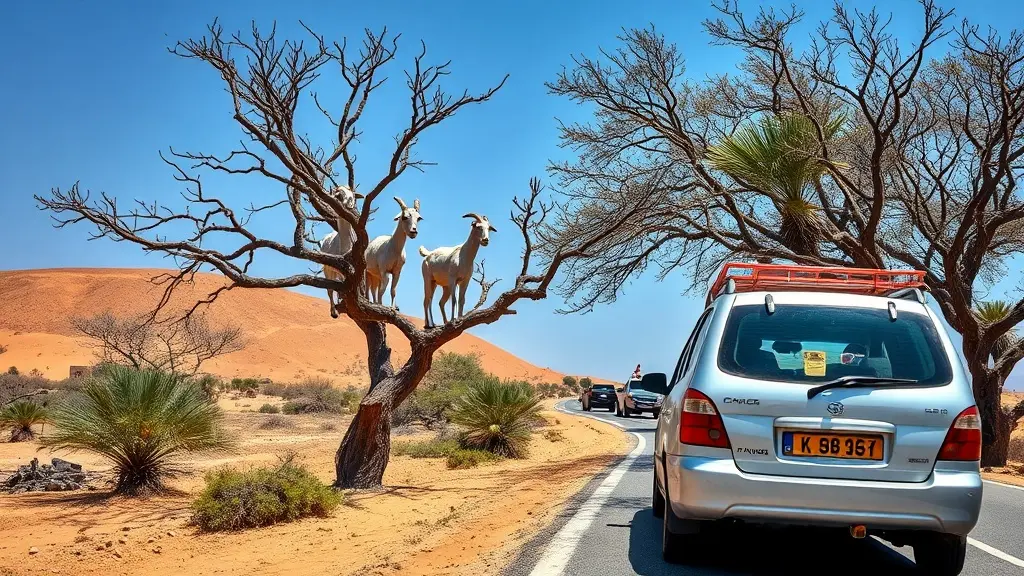
Essaouira-area roads include slow-moving traffic, rural animals, and weak nighttime visibility, so defensive driving matters more than speed. Donkey carts may appear on R207, P2216, or village roads toward Moulay Bouzerktoun, while scooters and mopeds can pass unexpectedly in town.
Pedestrians near Sidi Kaouki, Diabat, and the rural approaches to Tafedna may walk on the road itself at dusk, and dark clothing can make them difficult to see. A breakdown marker may be three stones placed behind a stopped car, so drivers should avoid relying on headlights alone when visibility drops.
Rental customers who want extra protection often compare CDW, SCDW, and FDW with a low or waived excess/deductible, because a stronger insurance package can reduce stress on rural roads. Some agencies also market full coverage or zero excess, while others explain the same benefit as franchise removal or rachat de franchise.
⚠️ Warning: In an accident involving a scooter or moped, local police may scrutinize the car driver first, so leave extra space and keep speeds conservative in mixed-traffic areas.
Best Roads and Day Trips Around Essaouira
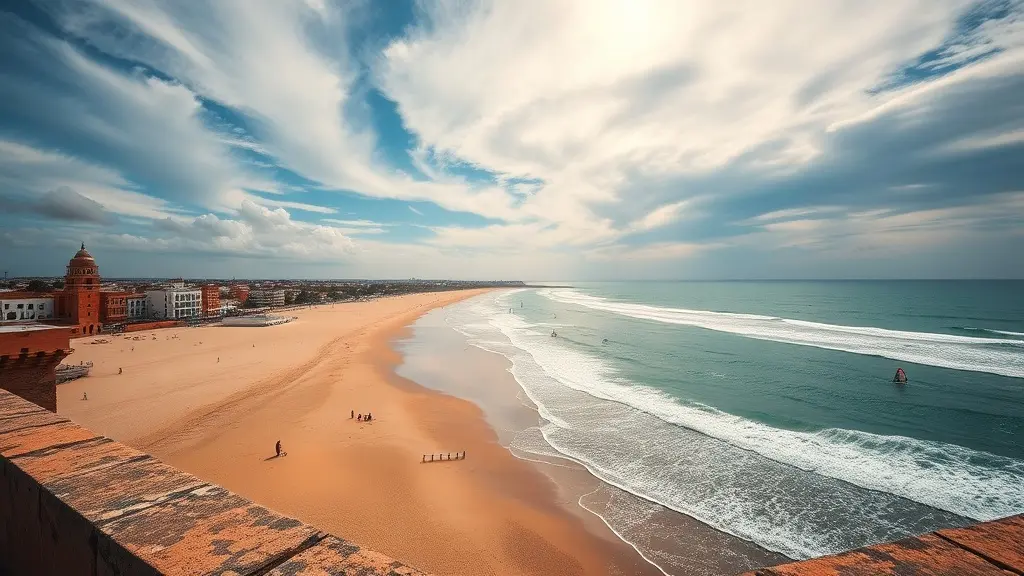
The best driving routes from Essaouira connect the coast, the argan-growing hinterland, and nearby surf villages without requiring complicated navigation. The coastal drive to Sidi Kaouki is one of the simplest day trips, while longer scenic routes toward Imsouane, Taghazout, and Tafedna suit drivers who want Atlantic views and quieter beaches.
Visitors heading inland can also drive toward Tamanar or continue toward Chichaoua and Marrakech, where the road network becomes busier and the driving style more urban. For families, a Dacia Duster or Dacia Lodgy offers more luggage space, while solo travelers often choose a Hyundai i10, Kia Picanto, or MG 3 for lower fuel use.
| Route | Road character | Suggested car type |
|---|---|---|
| Essaouira to Sidi Kaouki | Coastal, windy, scenic | Compact or small SUV |
| Essaouira to Diabat and Dar Sultan Palace | Short local drive | City hatchback |
| Essaouira to Tamanar | Rural and mixed traffic | Compact SUV |
| Essaouira to Marrakech | Main intercity route | Sedan or family car |
For planning deeper road trips, compare your options in our Essaouira coastal day trips guide and our Essaouira Mogador Airport rental guide.
FAQs
Do I need special insurance to drive in Essaouira?
No, you do not need special insurance beyond a valid rental policy, but stronger protection is often worth comparing. Many agencies offer CDW, SCDW, or FDW, and some also sell zero excess or full coverage packages that reduce the franchise or excess/deductible. The caveat is that policies differ by provider, so the rental contract should confirm whether third-party liability is included and whether rachat de franchise applies.
Can I pick up a car at Essaouira-Mogador Airport?
Yes, many travelers collect vehicles at Essaouira-Mogador Airport (ESU/GMMI) or nearby city offices. The airport pickup process usually starts in the arrivals hall, continues at the rental desk, and sometimes finishes with a shuttle to an off-site lot; this is common for both local suppliers and brands such as Avis or Budget. The caveat is that some agencies require a preauthorisation on the card, so you should check the deposit before arrival.
Which car is best for Essaouira roads?
A compact model such as a Dacia Sandero, Renault Clio 5, or Hyundai i10 is usually the easiest choice for city driving and parking. Drivers who plan coastal excursions or luggage-heavy trips often prefer a Dacia Duster, Jeep Renegade, or Dacia Lodgy because those models provide more ground clearance or space. The caveat is that wind exposure on open roads can make tall vehicles less relaxed to drive, especially near Sidi Kaouki or Moulay Bouzerktoun.
Is parking difficult in the Medina area?
No, parking is manageable if you use the supervised lots outside the Medina walls. The most practical options are near Bab Marrakech and Bab Sbaa, where gardiens manage flow and typically charge a modest hourly or daily fee. The caveat is that peak periods, including festivals and summer weekends, fill quickly, so early arrival is the safest plan.